1. Take the Shot
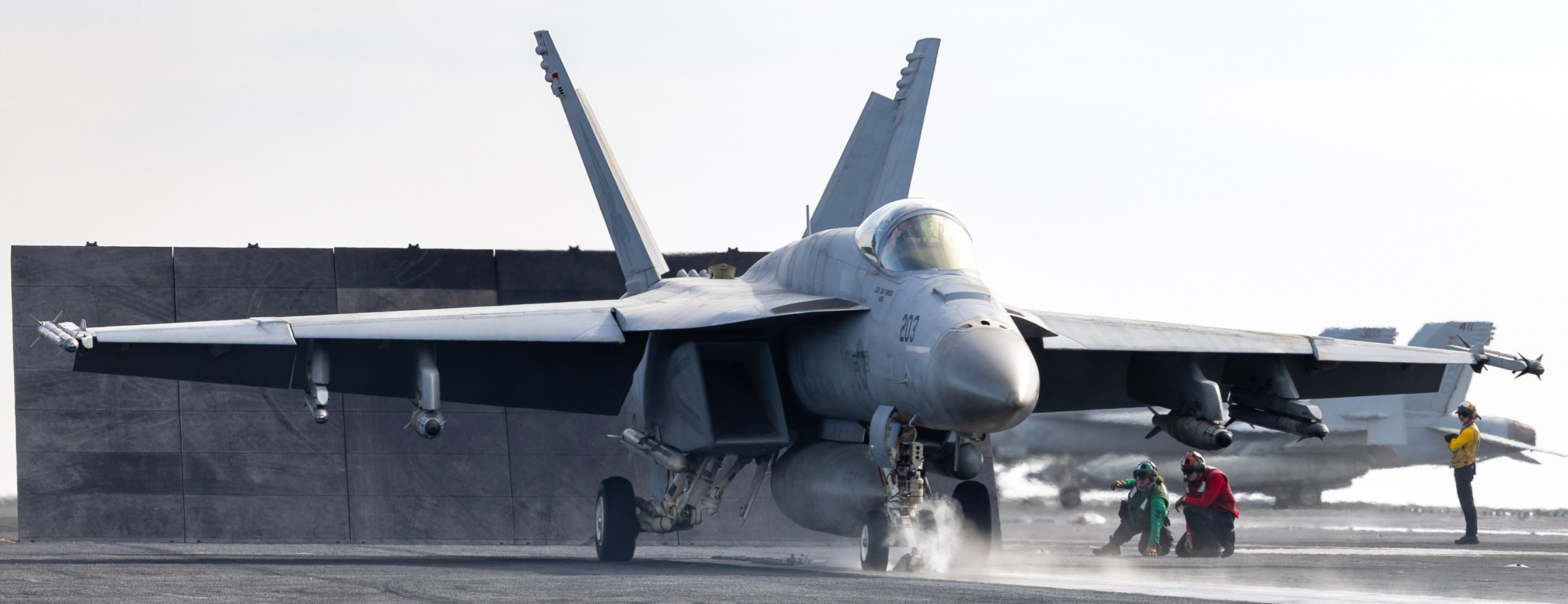
We checked into the southern Red Sea with swing loadouts. I was leading a junior pilot as my wingman. Immediately, we were told to investigate an unidentified object flying towards the airborne tankers.
We found the contact on radar and began the intercept. My onboard systems were degraded, so I couldn't identify the object at range, but it was entering the tanker track co-altitude. That meant it could be a Houthi cruise missile targeting our friendly tankers. It was also flying a profile consistent with an F-16, which made me nervous that it was a friendly aircraft. It was dusk so there was just enough light left to see something up close.
As I closed the distance, I could just make out the tiny wings and long slender fuselage of the cruise missile. I needed to shoot before it reached the tankers. I executed a displacement roll behind it and selected my AIM-9X. The high-pitched tone of the seeker-head cueing onto the missile blared in my ears. I pulled the trigger. The 9X came off my right wing like a roman candle and tracked and fused. A massive explosion filled my canopy, and I overbanked hard to avoid the debris.
My fuel state was low; so low that I was fast approaching the fuel necessary to get to a viable airfield divert. I promptly flew to the nearest airborne tanker to fuel my aircraft. A KC-135….The KC-135, colloquially known as the iron maiden, is hard to get fuel from, to say the least. It was getting dark and the lights of the tanker were off. Stabilizing the probe into the basket was just the beginning of the challenge associated with tanking on the iron maiden. I then had to hold the point in 3-D space with little external lighting. With turbulence, this can be like riding a bucking bull while trying not to spill your drink, all while being blindfolded. Thankfully we were both able to fill our aircraft. We flew the long flight back to the carrier for an uneventful night trap.
I tell that story not because it makes me sound impressive, but because nothing in my career happened by accident. Every lesson fed into that moment—the aggression to close the distance, the visualization that made the shot feel second nature, the compartmentalization that kept my mind laser focused. None of it was talent. All of it was practice. More importantly, I took a risk to achieve my goal of flying that put me in the arena.
2. Aggressiveness
As an instructor pilot, I could teach students how to handle the aircraft and fight their jet to its limit. What I could not teach was the will to win. That was either there or it wasn't.
Dogfighting is a zero-sum, one-on-one, physical contest. They call it a knife fight in a phone booth because that's what it feels like. If you weren't willing to max-perform the aircraft to the absolute edge of the performance envelope accepting the tunnel vision, the crushing G-forces, and the pain, you would lose to someone who was. In combat, losing meant dying.
I saw a direct correlation between students who had competed in athletics and those who performed well in training. Not because sports teach you to fly, but because they teach you to hurt and keep going. The students who lacked that competitive instinct struggled most in the moments that demanded full commitment.
Outside the cockpit, aggressiveness is not about bravado. It's the willingness to act when others hesitate. To make an uncomfortable call. To bid on the contract you think you might not win. To start the company when the timing feels wrong. Passivity is a slow path to mediocrity in any field where outcomes matter.
3. Day 1 Mindset
The best fighter pilots I flew with studied every single day. They reviewed tactics, studied threat updates, and dissected their recent flights. They did this as senior officers with thousands of hours the same way they did it as junior wingmen. Every day is day 1. Jeff Bezos said it best, "Day 2 is stasis. Followed by irrelevance. Followed by excruciating, painful decline. Followed by death. And that is why it is always Day 1."
What separated those who were great from the average pilots wasn't natural ability. It was the refusal to believe they'd arrived. Ego is required to be a fighter pilot because you need extraordinary confidence to strap into a machine that can kill you every time you fly it. But ego can become the thing that stops you from learning. From Caesar to Napoleon to MacArthur, hubris has destroyed people far more accomplished than any of us.
The world changes. Tactics evolve. Threats adapt. The fighter pilot who studied the playbook five years ago and stopped is now flying against an adversary who didn't. This applies identically to anyone running a team, building a product, or operating in a competitive market. The moment you feel like you've mastered something, you've started falling behind someone who hasn't. The red queen effect is real. Always run faster.
4. Compartmentalization
I missed my daughter's first steps. Her first birthday. Her first Christmas. I was on deployment when our dog died and I couldn't say goodbye. The pain of being a father and a husband while doing this job is real, and it doesn't go away because you're flying.
But the jet doesn't care about your grief. The mission doesn't pause because you're homesick. You either learn to set it aside and execute, or you become a liability to the people depending on you.
I learned to deal with this through Stoic philosophy. Marcus Aurelius wrote that you have power over your mind, not outside events. That single idea changed how I operate. You cannot control what happens to you. You can absolutely control how you respond. The gap between stimulus and response is where discipline lives.
Practically, this meant daily mindfulness meditation. Not as a wellness trend, but as a tactical skill. Recognizing emotion, acknowledging it, and then choosing to act without the emotion manipulating the reaction. This is a superpower.
5. Debrief
A typical one-hour flight includes at least two hours of preparation and can involve four or more hours of debrief. That ratio surprises people. It shouldn't.
The debrief is where learning happens. Not in the air, where you're saturated and reacting. Afterward, when you reconstruct the flight decision by decision, compare what you planned against what occurred, and identify where you deviated and why. It closes the feedback loop. Without it, you repeat the same mistakes.
Most professions have terrible feedback loops. A manager makes a hiring decision and doesn't learn whether it was good or bad for six months. A salesperson loses a deal and never finds out the real reason. A leader sets a strategy and measures results annually. These gaps between action and feedback are where mediocrity hides. The tighter you can make that loop with weekly metrics reviewed honestly, post-mortems after projects, candid conversations with clients, the faster you improve. The debrief is not a military concept. It's a learning concept that most people skip.
6. Visualization
Before every flight, I mentally rehearsed it. Not vaguely, but in detail. I visualized the perfect execution. Then I visualized failures: a hydraulic emergency on takeoff, a missile that didn't guide, a wingman out of position. I visualized my responses to each. By the time I strapped in, I had already flown the mission dozens of times in my head.
This practice started for me in high school baseball and became a foundational tool as a fighter pilot. Visualization cements neural pathways. It is not daydreaming. It requires focus, silence, and the discipline to sit with your eyes closed and build a scenario in granular detail while your phone buzzes in the other room.
This discipline is hard. Attention spans are shrinking. Our tolerance for silence and removing all stimulus is eroding. But visualization requires exactly those things. You cannot do it while scrolling. You cannot do it with a podcast running. You have to go into your own head, into the quiet place most people now actively avoid, and rehearse. When the real moment arrives, your brain has already been there. The thinking is done. You react.
7. Lead from the Front
In Naval Aviation, you learn to lead progressively: first as a section lead responsible for two aircraft, then as a division lead responsible for four. You make the decisions that determine whether the aircraft behind you come home.
On my most recent combat deployment in Yemen, the largest strikes were led by our Carrier Air Wing Commander. She didn't need to be there. Her role was strategic. But she flew at the front of the formation, and every aircrew knew it. That single act did more for morale and credibility than any speech ever could.
This principle scales beyond combat. The best leaders I've encountered put something real at stake. Their time. Their money. Their reputation. They don't ask teams to take risks they wouldn't take themselves. They don't manage from a safe distance and call it strategy.
This doesn't mean leaders should take unnecessary risks. But occasional, visible willingness to share in the difficulty—to be in the room, on the floor, in the field—builds a kind of trust that authority alone never will.
Postmortem
These lessons are not original. People have written about all of them before. What I do know is that I learned them at 500 knots with my life on the line, and they worked. They kept me and the people around me alive. I believe they can work in your life too.